
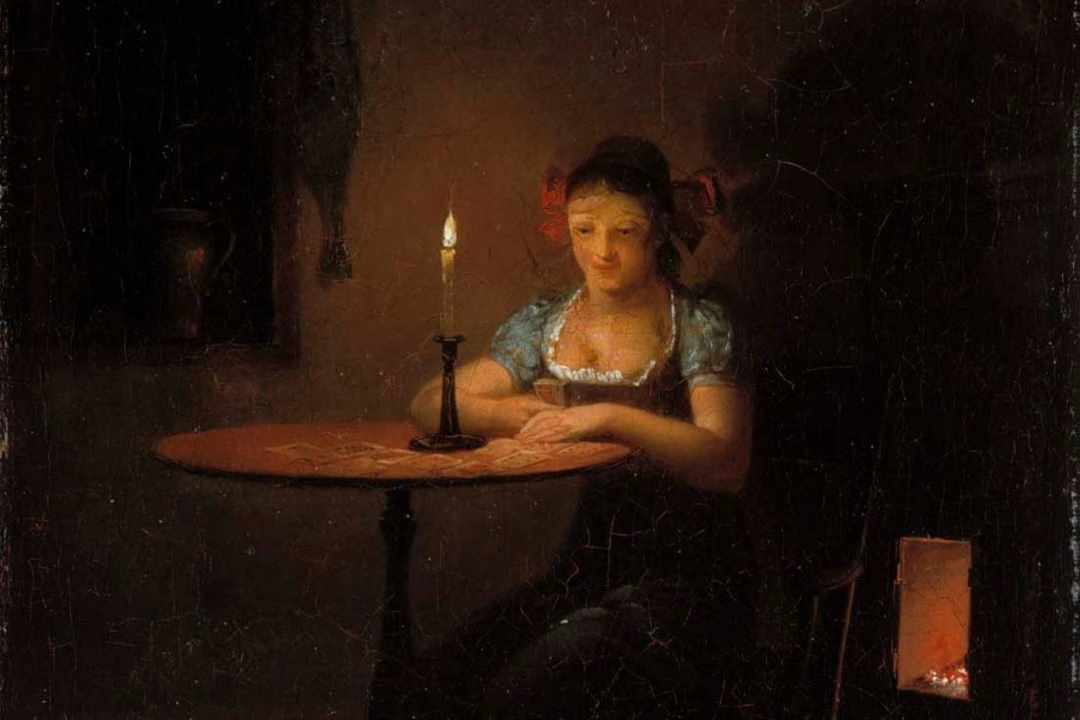
There’s a persistent myth that games are apolitical. But tabletop games, board games, and even casual party games are never neutral. Throughout history, games have reflected the cultures and values that created them.
In the Victorian era, for example, women often played patience games (like solitaire) as a socially acceptable pastime. These rituals reinforced gendered expectations; women must be be quiet, domestic, and contained.
Fast forward to today, and many of the most popular strategy games still carry baggage of colonialism, domination, and resource extraction. They celebrate conquest, expansion, and the control of land “belonging to no one,” a direct line to the ongoing legacies of colonization.
Even when we don’t realize it, when we sit down at the game table, we’re taking in more than mechanics. We’re also absorbing the stories, worldviews, and politics that shape the design. Recognizing this opens the door to reimagining what games can be: not just entertainment and escape, but tools for collective joy, curiosity, and resistance.
The Power of Play
Play is not just a break from the world; it’s a way of reshaping how we relate to the world and to each other.
- Party games invite us to laugh, connect, and share ideas.
- Tabletop roleplaying games let us imagine new worlds, new systems, and new identities outside the narrow confines we’ve inherited.
- Cooperative board games give us a space to practice solidarity.
- Competitive games let us explore ethics, conflict management, and respect.
The tabletop gaming industry is shifting in many ways. Independent creators are designing games that spark curiosity, delve into history and science, and center inclusion. Players, too, are asking harder questions about the narratives baked into mainstream games: Do we want to keep replaying stories of empire and extraction, or can we choose games that reflect systems of care?
As more recognize that all games are political, play itself becomes a site of possibility. Choosing what we play, and how, is part of resisting the idea that games must be escapist, apolitical, or reinforcing of the status quo.
Joy as Resistance
Ultimately, play is joy. And joy, especially collective joy, is powerful. In times of authoritarian creep and deepening inequality, joy can feel scarce. But gathering friends around a tabletop, laughing until our sides ache over a ridiculous party game, or working together to beat a cooperative challenge isn’t just fun. It’s planting seeds of resistance.
Neuroscience, psychology, and centuries of culture agree: adults need play just as much as kids. Play sparks creativity, strengthens social bonds, relieves stress, and expands our capacity to imagine alternatives to the systems we’re trapped in. And when imagination itself is under siege, play becomes a muscle we can’t afford to neglect.
Toward Collective Freedom
Whether we’re diving into a campaign of Dungeons & Dragons, tearing through a chaotic new indie party game, or shuffling a deck for a quick card game, we can remember: nothing is politically neutral. Every action moves us toward or away from collective freedom.
And if you’re looking for something that blends science, humor, and a little chaos, check out our own creation: Mate: The Party Game for Feral Naturalists. It’s where animal mating science meets party game fun—a reminder that play can be hilarious, curious, and liberatory all at once.
There’s a myth that movements toward collective freedom can’t be fun, that feminists want to abolish laughter and joy. On the contrary, we know that building freedom is joyful, hilarious, and best of all, shared in community.

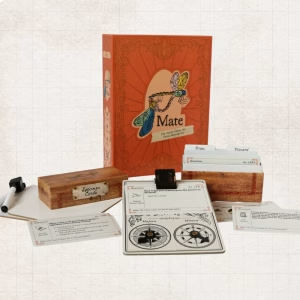
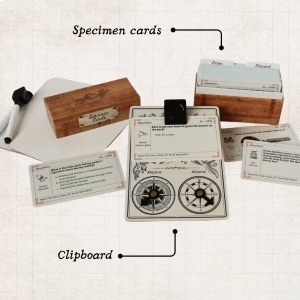

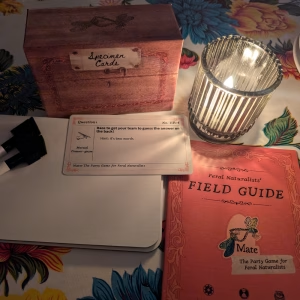


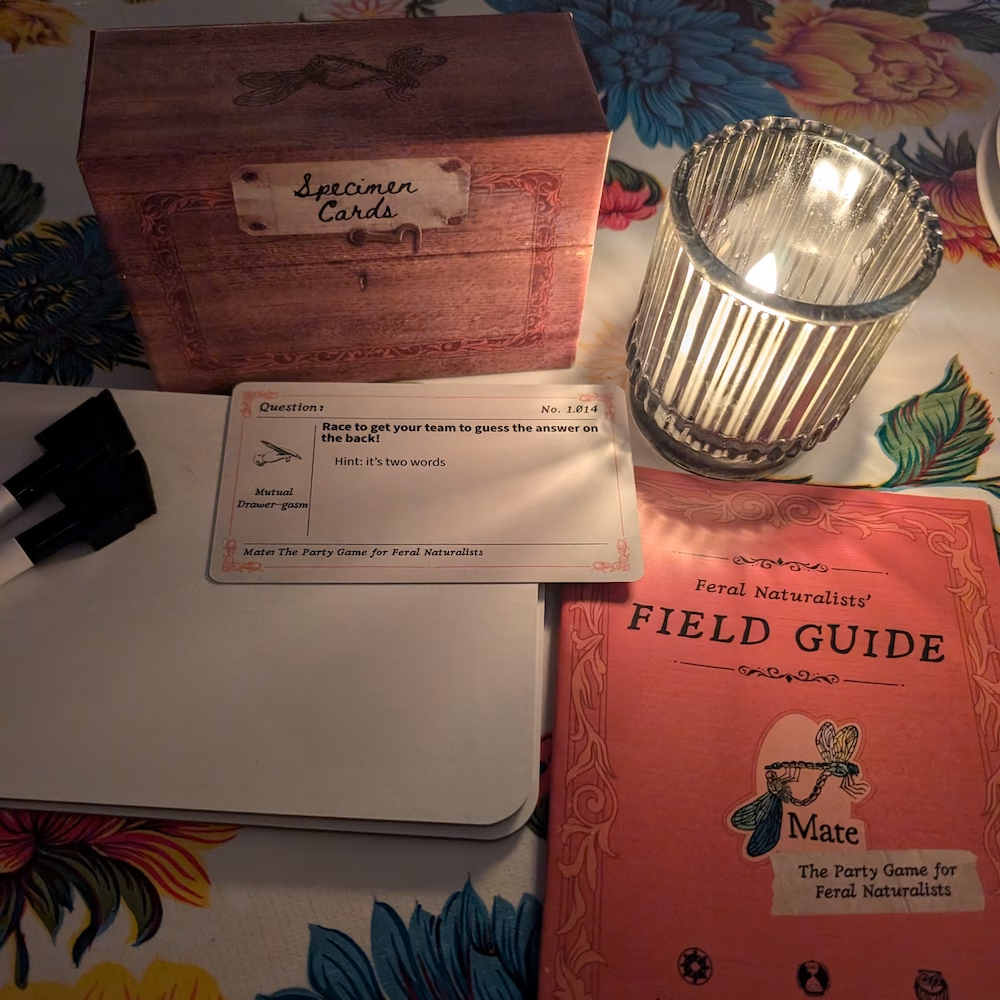
Mate: The Party Game for Feral Naturalists
Animal mating science meets party game fun. With your team of fellow feral naturalists, analyze specimens, answer queries, estimate measurements, and craft illustrations—all exploring animal mating behaviors and anatomy. For 4-8 players, ages 17 and up.